




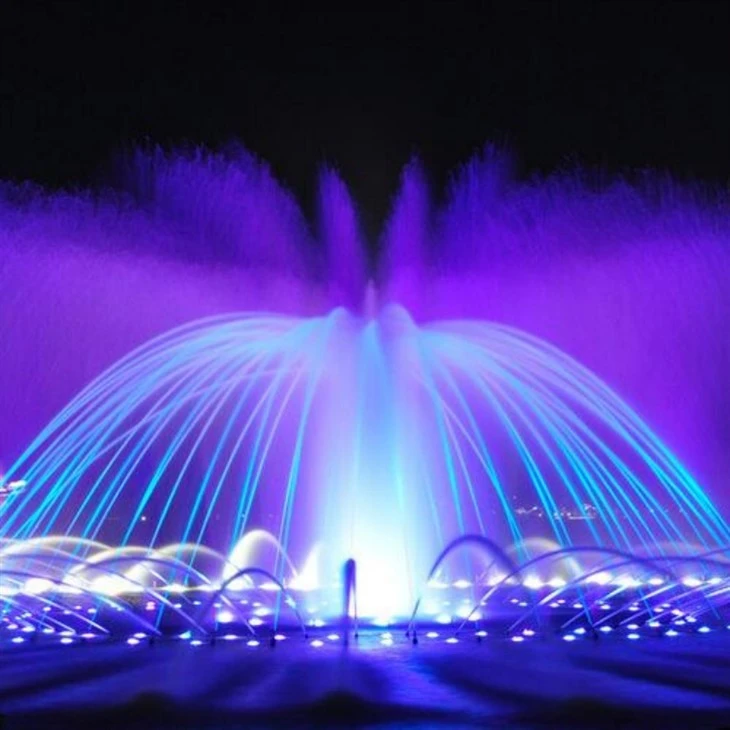
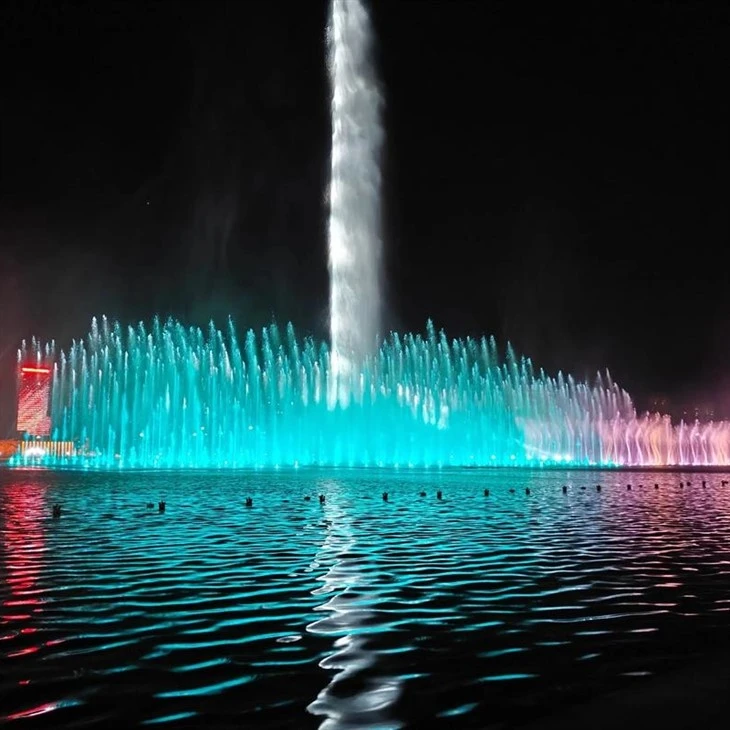
Lake Fountain
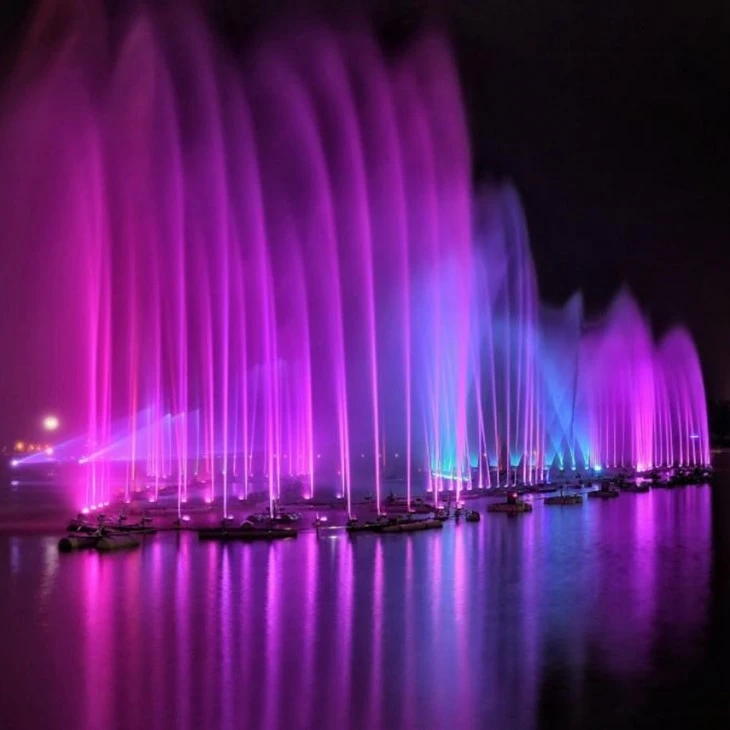
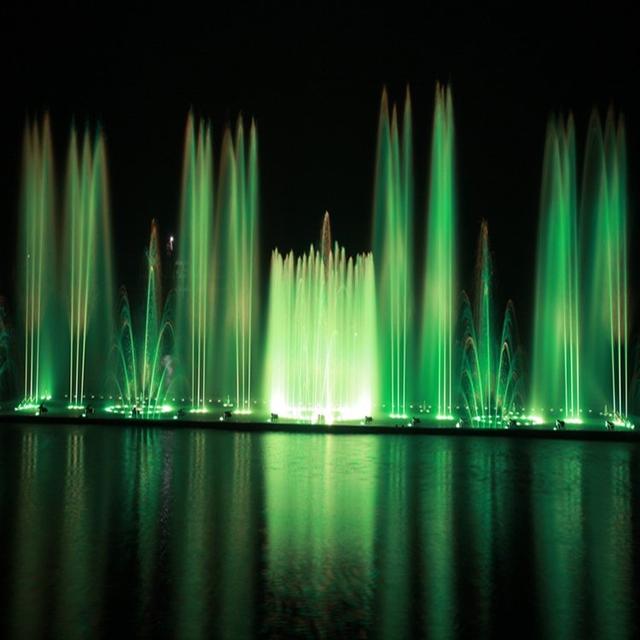
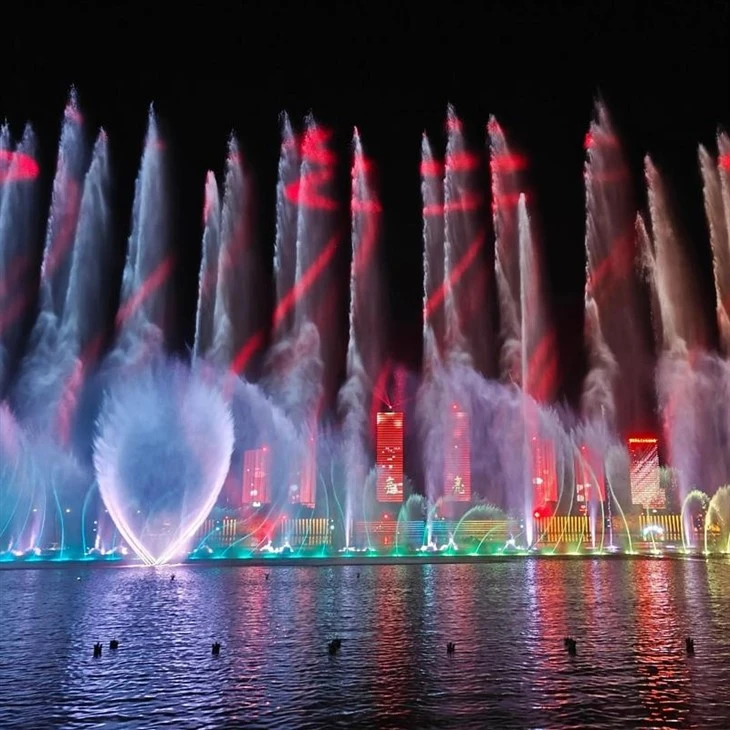
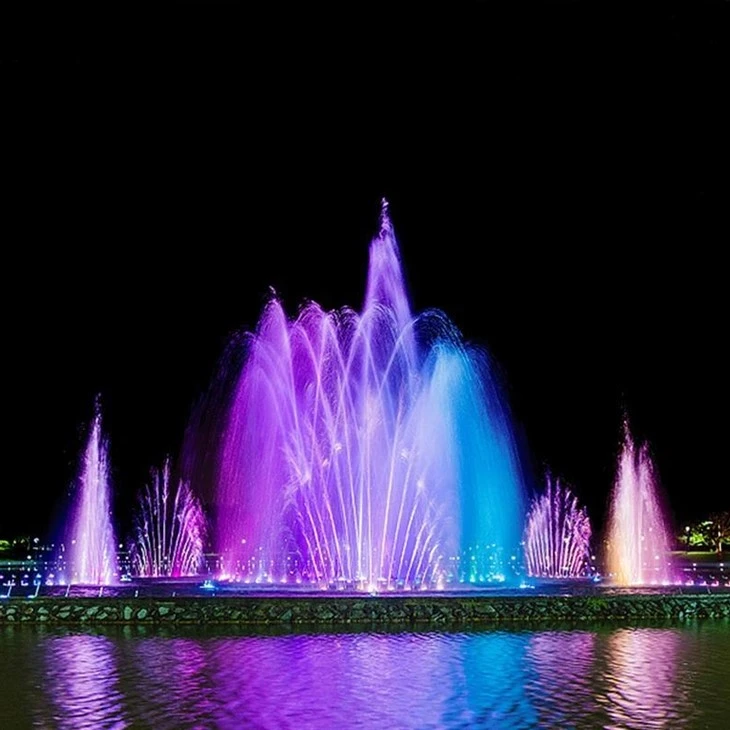
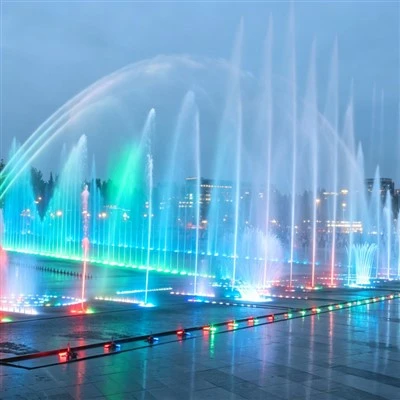
Lake-based musical fountains use intelligent control systems to perfectly synchronize water, light, and sound, creating dynamic visual art. The core lies in audio signal analysis and precise equipment control: pump pressure maps to amplitude, lighting colors correspond to frequency, and the swing amplitude synchronizes with the rhythm. Engineering design must balance fluid dynamics and ecological conservation, utilizing corrosion-resistant processes and waterproof electrical systems. Development trends are moving toward the integration of intelligence and ecology, such as machine learning-based parameter adjustment and rainwater recycling.
A lake fountain system consists of basic components such as a water source, piping, pumps, nozzles, and a controller. Water is transported through the piping, pressure is provided by the pumps, and the controller coordinates the various components according to a predetermined program. A swinging fountain builds upon this foundation by adding a mechanical swinging mechanism, allowing the fountain's form to change dynamically. The swinging mechanism is typically driven by a motor, which converts rotational motion into swinging motion via connecting rods or gears. The nozzles are rigidly connected to the swinging mechanism, thereby achieving the rhythmic swinging of the water jets. The nozzle angle, swinging amplitude, and frequency collectively determine the movement trajectory of the water jets.

The core of lake fountain engineering lies in the control system:
Upon receiving an audio signal, the control system must complete three stages: signal analysis, command generation, and execution. The audio signal first undergoes frequency separation to isolate energy information across different frequency bands. The controller converts this information into control commands to adjust the pump pressure, lighting colors, and oscillation amplitude independently. Changes in pump pressure correspond to audio amplitude and are precisely regulated via a variable frequency drive; changes in lighting colors typically map to audio frequency using RGB color mixing principles; and the oscillation amplitude can be synchronized with the rhythm to create a visual representation of the beat.
When designing lake fountains, water characteristics and environmental protection must be prioritized:
Water depth directly affects fountain height; according to fluid dynamics, there is a fixed proportional relationship between spray height, pump head, and nozzle diameter. A water treatment system is indispensable and typically includes filtration units, disinfection equipment, and pH adjustment units to prevent algae growth and equipment corrosion. In ecologically sensitive areas, special attention must be paid to controlling fountain height and operating hours to avoid disturbing nearby bird habitats. Winter freeze protection measures involve pipe insulation and drainage design to ensure the system remains intact in low-temperature environments.


The design of lake fountain projects must comply with both structural mechanics and electrical safety standards:
Support structures are constructed from different materials depending on the fountain's scale; small fountains typically use stainless steel frames, while large-scale projects require concrete foundations combined with steel structures. The electrical system is designed to meet diverse waterproofing requirements; all underwater cable joints use specialized waterproof connectors, and control cabinets must be equipped with ground fault circuit interrupters (GFCIs) and overload protection devices. The design of the oscillating mechanism must account for dynamic loads, and bearing selection must consider anti-corrosion requirements in aquatic environments. Lighting systems typically employ low-voltage LED fixtures, which reduce energy consumption and enhance safety.
The manufacturing process for lake fountain equipment involves precision machining and corrosion-resistant treatments:
The internal flow channels of the nozzles are machined using CNC machines, and surface finish directly affects the quality of the water patterns. Metal components undergo multiple anti-corrosion processes: first, sandblasting to remove the oxide layer; then, hot-dip galvanizing or electroplating to form a protective layer; and finally, coating with a specialized anti-corrosion paint. The gearbox of the swing mechanism requires a special sealing design to prevent water ingress that could affect transmission accuracy. All underwater components undergo pressure testing to ensure no leaks occur at the rated operating pressure.


The programming of lake fountains is based on timecode synchronization technology:
Programmers import musical compositions into specialized software, which visualizes the audio waveforms. Programmers then set control points along the timeline. Each control point corresponds to a set of equipment parameters, including pump frequency, lighting color values, and swing angles. Changes in parameters across different equipment groups can create visual effects akin to harmonies. Programming must account for the mechanical response delay of the fountain equipment; time compensation is used to ensure that water pattern changes are precisely synchronized with the musical beat. Complex programs are typically edited track-by-track, similar to multitrack recording in music production.
Maintenance of the lake fountain system relies on a regimen of regular inspections and preventive maintenance:
Water quality monitoring is conducted weekly, primarily testing turbidity, residual chlorine levels, and electrical conductivity. Mechanical components are inspected monthly for wear on the oscillation mechanisms, and bearings are lubricated with specialized grease quarterly. Electrical systems undergo insulation resistance testing every six months to ensure grounding resistance meets safety standards. During winter shutdowns, all residual water must be drained from the pipes, and rust-preventive maintenance must be performed on the pumps. Control programs are backed up regularly, and equipment operation data is recorded and archived to provide historical references for fault diagnosis.

Hot Tags: lake fountain, China lake fountain manufacturers, factory
Previous
Artificial Lake Musical FountainNext
River FountainYou Might Also Like
Send Inquiry