






River Fountain
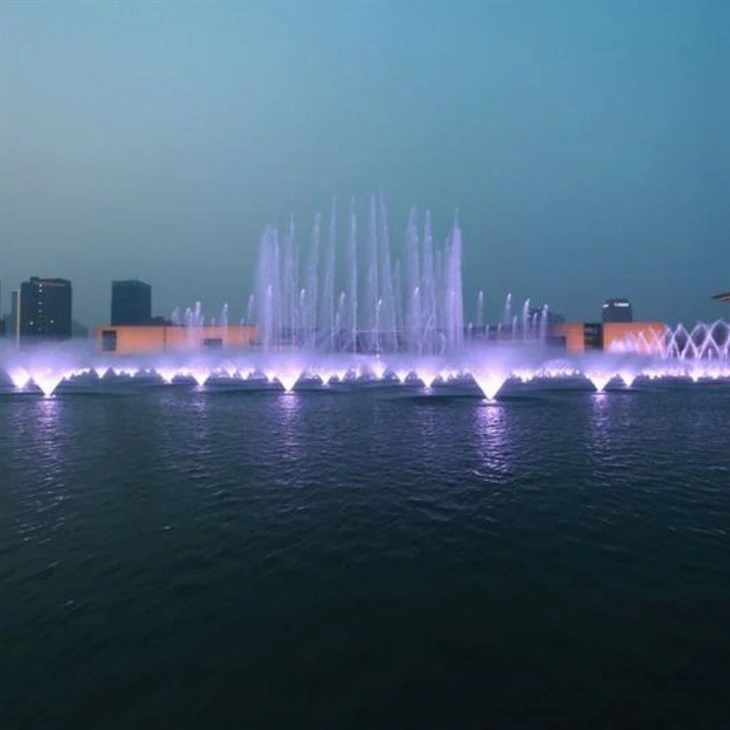
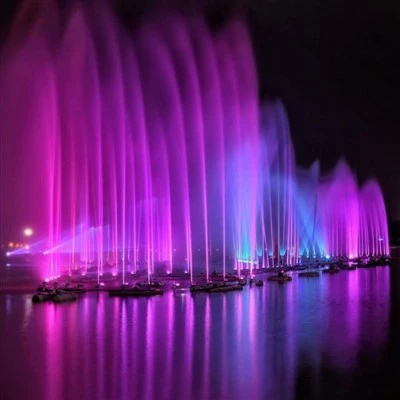
The River Fountain is a flood-resistant, intelligent dynamic water feature system specifically designed for urban rivers, waterfront landscapes, and cultural and tourism waterways. It integrates landscape performances, nighttime illumination, water aeration, and river ecological restoration. To address the unique operating conditions of rivers-such as significant water level fluctuations, complex water currents, flood discharge during the rainy season, and high sediment content-the equipment features a waterproof and corrosion-resistant structural design. It supports retractable concealment, floating adaptation, and automatic flood protection, fully complying with river flood discharge safety standards.
The entire system utilizes corrosion-resistant stainless steel piping, silent variable-frequency pumps, low-voltage waterproof lighting, and an intelligent central control system to achieve dynamic effects such as multi-dimensional CNC water patterns, music synchronization, lighting synchronization, and automatic program switching. Depending on river conditions, the equipment can be configured with various structural options, including pile-mounted elevating units, floating pontoons, or shore-mounted fixed units. It adapts to rivers of varying widths, water levels, and climatic conditions across different regions. Installation does not damage the riverbed structure, and subsequent operation and maintenance are convenient.
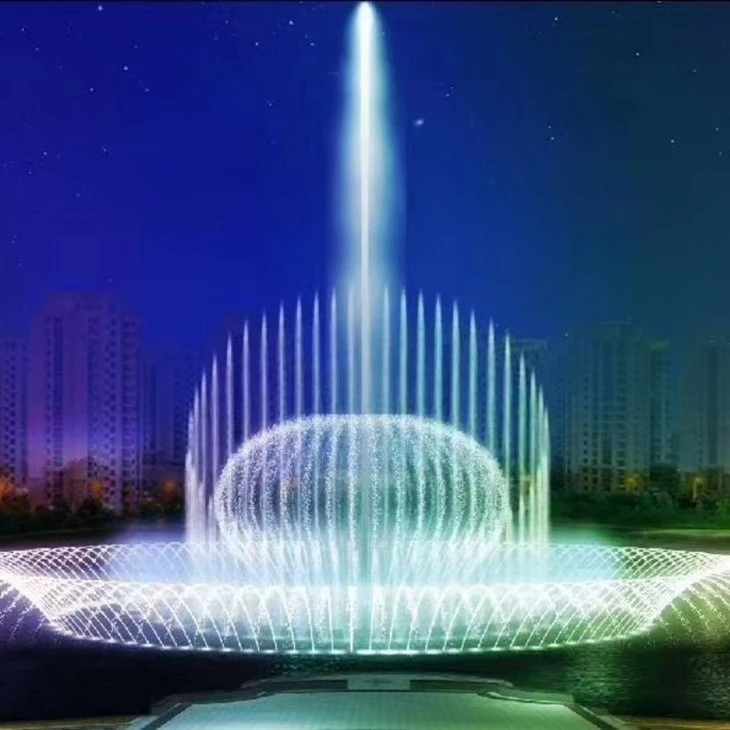
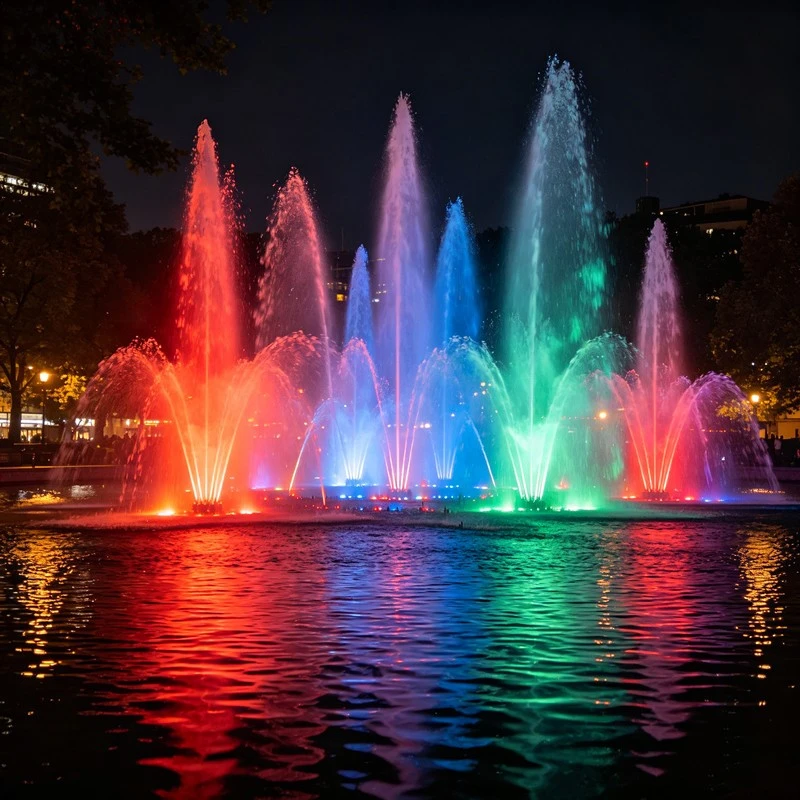
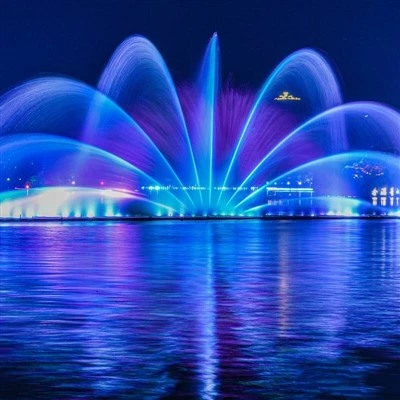
The product combines aesthetic appeal with practicality. During the day, it improves water quality, revitalizes the water body, and suppresses black and odorous conditions through bubbling aeration. At night, it creates an immersive waterside nightscape through varying spray heights, swaying water patterns, and light and shadow performances. It serves as a core landscape product for urban river upgrades, cultural and tourism lighting projects, and the enhancement of popular "Instagrammable" water features.

Selecting the right river fountain equipment is a highly technical task that requires continuous experience and a multidisciplinary team. For instance, the motor control system-the core of the fountain display and the most technically demanding component-as well as tasks like pipe welding, all require skilled electricians.
① If existing pump models cannot meet the design flow rate and head requirements of the fountain system, solutions such as series connection, parallel connection, or variable-speed operation can be employed. The selection of fountain pumps must strictly comply with the design specifications of the fountain system, including both the required flow rate and head. Only by meeting these requirements can the intended design effects be achieved.
② The flow rate and head of the selected pump should generally match the fountain system's design flow rate and head. Furthermore, as the operating point changes, the pump must remain within its high-efficiency range to prevent cavitation or overloading of the power source.
③ The size and number of pumps are interdependent. If a larger pump is selected, efficiency is higher, fewer units are required, and costs for equipment, civil engineering, and management can be reduced accordingly; however, the number of units should not be too small, as a failure in a single pump would significantly impact the entire system. Typically, installing 2 to 4 units is appropriate. When the system's design flow rate is small, a single pump may be sufficient, but a sufficient quantity of spare parts should be stocked. Sprinkler pump stations generally do not include standby pumps.
④ If several pump models can meet the design flow rate and head requirements of the fountain system, the model with the highest efficiency, lowest power consumption, and ease of operation and maintenance-while minimizing the total investment in the fountain system-should be selected.
⑤ Pumps installed in the same fountain system should be of the same type as much as possible, as this: (1) facilitates management and spare parts replacement; (2) accommodates automated and semi-automated control; and (3) simplifies the layout of the pump house.
Complete Standardized Installation Process for River Fountains

Preliminary River Preparation
Construct cofferdams to drain the river in sections; use dredgers to remove sediment down to the hard subgrade, with a dredging depth of ≥0.8 m;
Grade the riverbed and lay a 20 cm graded gravel base course with a compaction rate of ≥93%;
Survey and stake out the site, precisely marking the locations of pile foundations, lifting bases, control rooms, and cable trenches.
Foundation Civil Engineering Construction (Pile Foundation with Lifting Mechanism)
Drilled-shaft pile construction: Φ600 pile foundations, effective pile length 6–10 m, poured with C30 concrete;
Cap Foundation: C35 impermeable P6 concrete with double-layer reinforcing mesh, pre-embedded bolts for pump mounting;
Corrosion Protection: Steel truss structure treated with a three-layer system-epoxy zinc-rich primer + micaceous iron oxide intermediate coat + polyurea topcoat-to resist river water corrosion;
Floating-type design requires no civil engineering work; simply assemble the floating blocks in the river channel and anchor them with steel cables.


Installation of the Submerged Pipeline System
Piping Materials: 304 stainless steel seamless pipes for main lines; PE heat-fused pipes for branch lines;
Welding: Argon-arc welding for stainless steel, with anti-corrosion treatment applied to welds; PE pipe heat-fusion temperature: 190°C, followed by 30 minutes of cooling and curing;
Pipe Fixation: Fixed with angle steel brackets-one bracket every 3 m for horizontal pipes and every 1.5 m for vertical pipes; rubber expansion joints are installed at valve locations to absorb water flow impact;
Pipe Flushing and Hydrostatic Testing: Maintain pressure for 30 minutes with no leaks; install spray heads only after thoroughly flushing out all silt and debris from the pipes.
Installation of Underwater Equipment
Variable-frequency submersible pump: Secured to the base with non-shrink grout; a vortex-preventing filter screen installed at the suction inlet; submersion depth ≥50 cm;
Spray nozzles installed with swivel joints, allowing space for disassembly and maintenance, with angles precisely calibrated;
Underwater lights are mounted on the lower side of the bracket to avoid glare caused by direct water jets;
Underwater cables are routed with all joints sealed and waterproofed; cables are laid with sufficient slack to accommodate water level fluctuations.


Installation of Onshore Control Room, Power Distribution, and Audio Systems
High- and low-voltage distribution cabinets, variable frequency control cabinets, and the fountain master control system are arranged in separate zones with proper moisture protection and dehumidification;
Outdoor waterproof speakers are installed along both banks of the waterway to ensure full coverage without blind spots, with nighttime volume controlled;
Low-voltage shielded cables and power cables are laid in separate trenches to prevent signal interference.
Hot Tags: river fountain, China river fountain manufacturers, factory
Previous
Lake FountainNext
Scenic FountainYou Might Also Like
Send Inquiry