








Square Dry Fountain
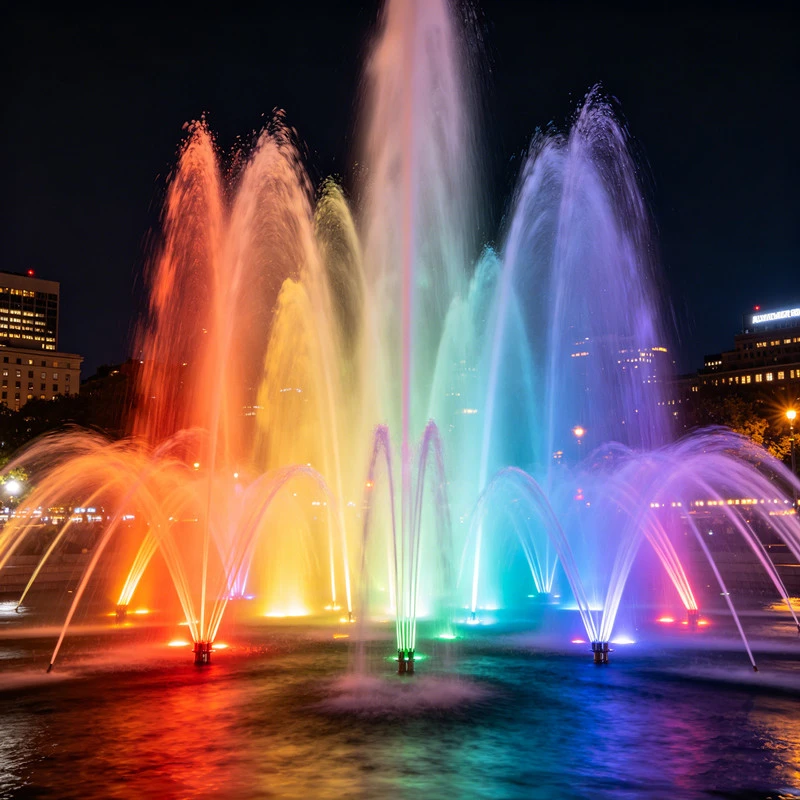
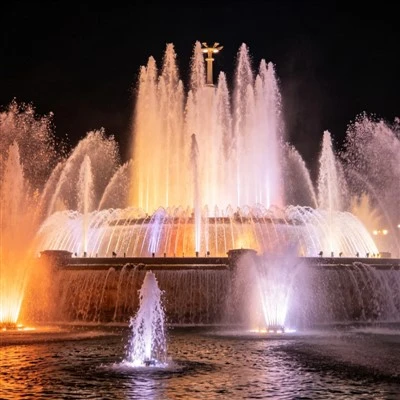
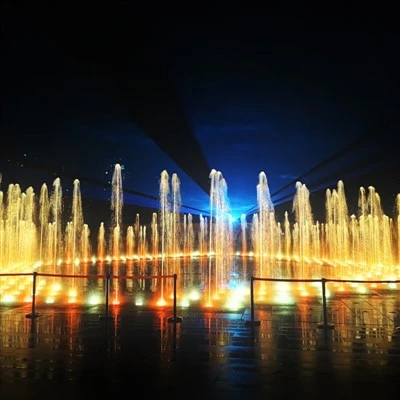
A dry fountain, also known as an in-ground fountain or underground fountain, is a landscape feature in which the fountain system is concealed underground, with nozzles and lighting installed beneath a mesh cover. When activated, water jets emerge through openings in the cover or granite paving; when deactivated, the surface remains level, allowing pedestrians to pass and the area to be used normally. The water basin, nozzles, and lighting system are all concealed beneath the grating, which is typically paved with smooth stone in decorative patterns. When the fountain is in operation, it can be accompanied by colored lighting and musical effects.
The operation of a dry fountain system relies on precise electromechanical controls. The control unit acts as a central nervous system, directing the pump to pressurize water from an underground reservoir and deliver it through pipes to specific nozzles based on preset programs or sensor signals. The design of the nozzles determines the water patterns, with common forms including columns, mist, arches, and dynamic combinations. Waterproof lighting fixtures integrated near the nozzles or within the water basins use color filters or LED technology to create colorful effects on the water jets. After the water falls back to the ground, it flows through a grate into the lower reservoir, where it undergoes water treatment processes such as filtration and disinfection before re-entering the circulation system, effectively conserving water resources. The system's concealed design maximizes space utilization, making it suitable for public spaces such as commercial plazas, parks, and pedestrian streets.
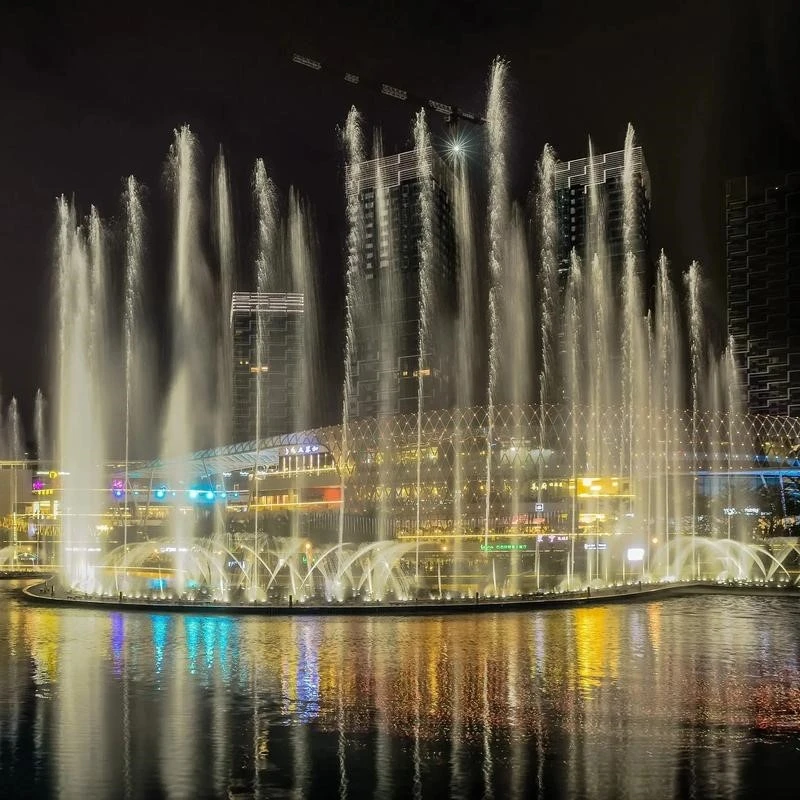
1. The signal processing of the control system determines the performance patterns of the plaza's dry-land fountain. Programmers convert preset spray heights, pattern combinations, and timing sequences into control code, which is then loaded into a programmable logic controller (PLC). Based on time instructions or external sensor signals, the controller sends on/off signals to solenoid valves installed on the piping. These valves, through their actuators, regulate water flow to control the sequential or synchronized activation and deactivation of each nozzle group, thereby creating dynamic water patterns.
2. The power supply unit provides the necessary water pressure for the entire system. Water from the clear water tank is transported through pipes to submersible pumps or centrifugal pump sets. The motor drives the impeller to rotate, converting mechanical energy into the kinetic and potential energy of the water. Pump selection requires precise calculation of the nozzle's design flow rate and the required head to ensure that the water jet reaches the predetermined height and maintains a stable shape. Pump sets are typically equipped with variable frequency drives to enable smooth water pressure regulation and energy-efficient operation.
3. The mechanical structure of the nozzles directly influences the final water pattern. In-ground fountains commonly use internal-rotation straight-jet nozzles, which feature an internal deflector core that causes the water flow to rotate before ejection, resulting in a straight and concentrated water column. By replacing nozzles of different diameters or adjusting the angle of the deflector vanes, the thickness and dispersion pattern of the water column can be altered. All nozzles are mounted on lift sleeves concealed beneath the ground paving. During performances, they are raised and exposed by water pressure; after the show, they retract under their own weight or via a reset mechanism.
4. The layout and material selection of the piping network are critical to the system's long-term reliability. Water supply pipes are typically made of stainless steel or UPVC to withstand water pressure and prevent corrosion. Pipes are arranged in a loop or branch configuration above the reservoir to ensure balanced water pressure to all nozzles. All pipe connections must undergo rigorous airtightness and pressure strength testing to prevent leaks that could cause soil softening beneath the ground or system pressure loss.

The construction of dry fountains also involves coordination with the existing structures of the plaza. Contractors must embed conduit and reserve access shafts during the civil engineering phase, ensuring that the paving in the fountain area seamlessly connects with the surrounding terrain. The paving materials must also possess a certain degree of permeability to facilitate drainage. Electrical and control lines must be waterproofed and insulated, and integrated into a unified access shaft for ease of future maintenance.
The technical implementation of a dry fountain involves the precise integration of multiple engineering processes, including water circulation and treatment, mechanical control, power transmission, and structural design. Its core technology lies in a concealed, integrated system that coordinates water storage, purification, pressurized spray, and orderly recovery within a limited underground space, ultimately presenting a dynamic water feature in public spaces that is both visually appealing and does not interfere with daily functions.
Hot Tags: square dry fountain, China square dry fountain manufacturers, factory
Previous
Lake Musical FountainYou Might Also Like
Send Inquiry